“Residential building” is one of those phrases that sounds like it describes something specific and doesn’t.
We went back through every case study we have published and pulled out the physical facts: what these buildings actually are, how many entrances they have, what they used to be. Not the software, not the outcomes. Just the buildings. They are all described in the same three words, and not one of them is the same job as any other.
A clothing factory in Surry Hills
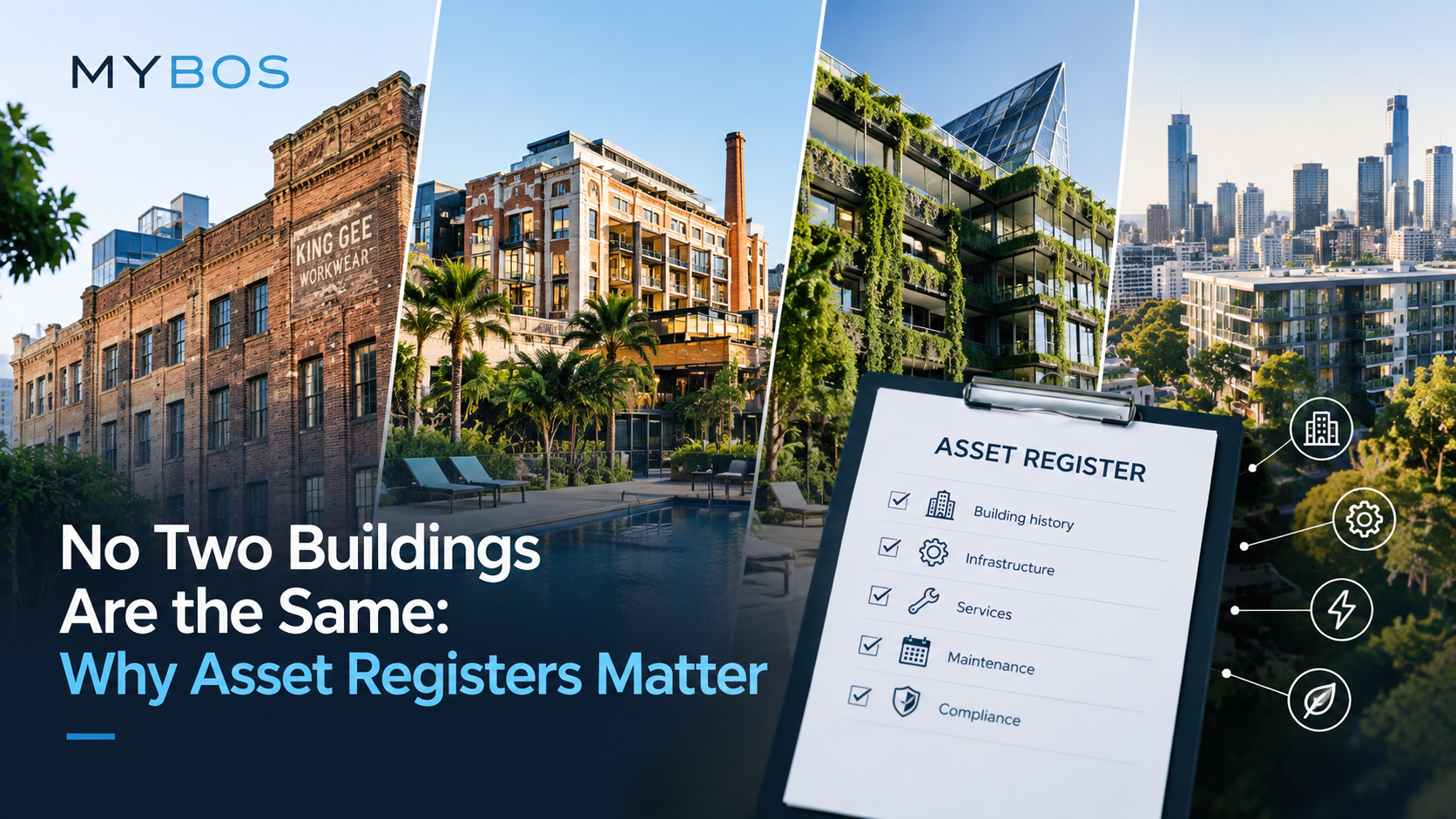
Paloma, on Chalmers Street, is 70 residential lots and three commercial ones. Before that, it was a King Gee clothing factory. Before that, it housed soldiers returning from the First World War. It became apartments in 1996 and was substantially refurbished in 2012.
Greg Warrilow chairs its strata committee. Read that history again and think about what it means operationally: a building envelope designed for industrial use, converted thirty years ago, refurbished fourteen years back, with two distinct layers of building fabric underneath whatever was done most recently. Every service run in that building went in after the walls did.
A canning factory in Teneriffe
The Cannery, in Brisbane, is a heritage conversion of the former IXL canning factory — now with a resort-style pool, a gym and subtropical gardens. Matt Guttormsen manages it.
He also manages Mariners Reach, and this is where the numbers get interesting. Eleven entrances. Eleven elevators. Four basements. Thirty-two physical noticeboards, which used to take about half an hour to walk around whenever something needed posting.
Same manager. Same job title. Two buildings that share almost nothing beyond the word “residential”.
Six and a half thousand square metres of public space
Manage Meant, founded by Darren Gardner in 2005, manages Central Park in Chippendale — roughly 6,500 square metres of public space. One Central Park holds a 5 Star Green Star rating from the Green Building Council of Australia, the largest multi-residential building in Australia to have one. It has vertical gardens, a cantilevered heliostat, and low-carbon energy and water recycling systems.
A heliostat is a mirror array that tracks the sun and redirects light. It is not standard plant. There is no generic maintenance schedule for it, and nobody arrives at that building already knowing how it works.
And then the scale problem
Structure Building Management runs 12,500 lots across 100 buildings. BFMS manages more than 50 strata plans. CLLIX operates 20-plus properties across Brisbane, Melbourne, the Gold Coast, the Sunshine Coast and Adelaide. Manage Meant looks after 5,500 apartments across 66-plus entities.
Multiply the variation above by those numbers, and you have the actual problem. It is not that one building is complicated. It is that no two are complicated in the same way, and somebody is expected to hold all of it.
What this means for the people doing the job
Three things, and none of them are about software.
The first is that experience transfers less than people assume. A manager who has run a 1996 factory conversion knows a great deal that does not apply at a building with a heliostat. Handover documents that say “as per standard” are describing a standard that does not exist.
The second is that the admin load scales with variation, not with unit count. Thirty-two noticeboards is not a large building problem; it is a layout problem. Four basements is not about size either. These are the costs that never appear in a management agreement because nobody thought to count them.
The third is that most of this is invisible until someone writes it down. Every building above has a history that shapes what breaks and when — and in most buildings that history lives in one person’s head, and leaves when they do.
The gap
Which is the honest case for keeping a proper asset register, and the reason the good ones take weeks rather than an afternoon: the register is the only place a building’s actual specifics survive a change of manager.
How long did yours take to build? Tell us, and we will put the numbers in a future post, named or unnamed, whichever you prefer.
See how other buildings manage the complexity
Every building has its own history, assets and operational challenges. The right systems help make sure that knowledge doesn’t disappear when a manager, contractor or committee member changes.
Want to see how other property and strata teams are managing buildings with different requirements and levels of complexity?
Explore our MYBOS case studies to see how building managers and property teams use MYBOS to keep building information, maintenance, contractors and day-to-day operations organised in one place.
Want to see how it works for your building?
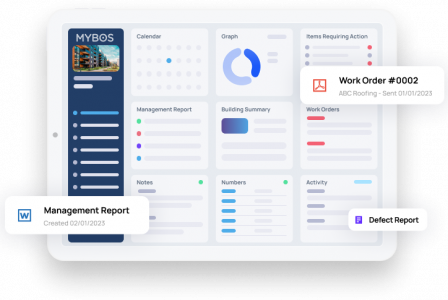
Book a demo of MYBOS Building Asset Management to see how MYBOS can help your team build and manage a complete asset register.