Tracking Building Expenses and Invoices: 5 Tips Every Building Manager Should Use
Managing a building isn’t just about keeping the lights on, it’s about ensuring every dollar is accounted for and used wisely. For today’s facility and strata managers, building manager expense tracking and accurate invoice management are no longer optional; they’re vital for financial control, compliance, and long-term asset health.
However, many building managers can find themselves still relying on legacy systems like manual spreadsheets, paper-based invoices, and disconnected accounting tools that can make it easy for costs to slip through the cracks.
As CREtech reports in its coverage of automation and real estate operations, automated workflows especially for billing and payables and free teams from admin drag, reduce errors, and give meaningful time back to focus on higher-value work.
For building managers juggling multiple contractors, service providers, and budgets, implementing strong expense-tracking software isn’t just helpful, it’s increasingly unavoidable.
1. Centralise Invoice Management with Digital Tools
One of the biggest pain points in property operations is keeping track of multiple invoices from different contractors, suppliers, and service providers. A lost invoice or late payment not only damages relationships but can also lead to compliance risks.
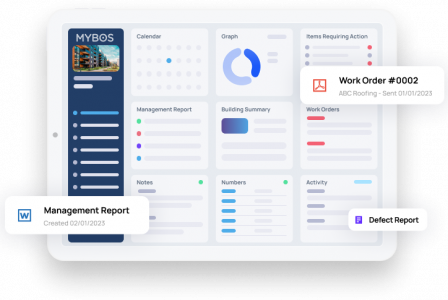
When using invoice management for building managers through a centralised digital platform, managers can streamline invoices and payments building managers, reduce errors, and maintain transparent records. Smart building management software tools allow invoices to be uploaded, categorised, and tracked in real time, ensuring no payment falls through the cracks.
This kind of digital consolidation is similar to the efficiencies achieved when choosing the right building management solution for your property, where integrated tools drive both operational and financial clarity.
2. Use Predictive Forecasting to Plan Budgets Better
Expense tracking isn’t only about logging costs, it’s about anticipating future needs and preventing financial surprises. Without a clear roadmap, managers risk reactive spending, budget blowouts, and underfunded projects. Predictive works forecasting helps managers map out upcoming maintenance, repairs, and capital expenditures with greater accuracy, ensuring cash flow is allocated strategically and resources are used where they matter most.
By incorporating property management expense tracking with forecasting models, managers can shift from reactive to proactive financial planning. This budget management for building managers approach also makes it easier to justify decisions to stakeholders, as forecasts are backed by data and asset performance trends. This tool stack becomes especially helpful when integrated with asset lifecycle planning, as explored in MYBOS’ guide to predictive works forecasting for long-term building health.
3. Standardise Expense Categories for Clarity
A common issue in siloed accounting systems is inconsistent categorisation of costs. For example, repairs might be logged under “maintenance” in one report but “operations” in another, creating confusion and inaccurate financial statements.
By establishing a standardised expense framework, building managers can:
- Improve reporting accuracy
- Spot overspending patterns quickly
- Align with owner committee reporting expectations
- Ensure compliance with auditing requirements
Dexus emphasises strong transparency and structured governance in its corporate governance framework, particularly in its section on investor reporting and internal controls. With clearly defined reporting processes and consistent disclosure policies, organisations build trust and have a stronger foundation for financial clarity.
A clear strata or facility expense reporting process gives stakeholders confidence and avoids disputes over unclear financial records.
4. Embrace Automation for Expense Tracking
Manual entry is not only time-consuming, it’s also very error-prone. Automated invoice tracking solutions for property management can integrate with existing accounting systems to automatically pull in invoices, directly allocate them to budget categories, and seamlessly generate approval workflows.
Key benefits of automating these steps can include:
- Fewer errors from manual entry
- Faster approvals with automated notifications
- Real-time visibility of payments and outstanding invoices
- Better cost control by linking invoices directly to budgets
For managers looking to lower operating costs, automation plays the same role in finance as it does in building operations, providing streamlined, measurable savings (discover four practical tips for lowering operating costs here).
5. Regularly Review and Report Financial Performance
Tracking expenses is only effective if the data is regularly reviewed and reported. Building managers should establish a routine monthly or quarterly to analyse expense trends, compare budget forecasts against actuals, and share results with owner committees.
Using smarter tools, managers can generate detailed yet easy-to-read financial summaries. This not only supports compliance but also strengthens trust between building managers and stakeholders, especially when transparent reporting demonstrates efficient cost control for building management.
An article from Forbes underlines that a “data-driven monitoring of financial metrics” is key to driving accountability and improving decision-making in any organisation. Regular reviews of financial performance close the gap between strategy and execution, and foster more responsive resource allocation.
Smarter Building Expense Tracking: How Digital Platforms Improve Accuracy and Transparency
With rising costs and increasing compliance requirements, traditional methods of financial tracking are no longer sufficient. Digital financial tools for facility managers allow real-time visibility, automated workflows, and smarter decision-making. More importantly, they integrate with broader digital tools for building operations, ensuring finance and operations work together seamlessly rather than in silos.
Investing in real-time finance-operations integration isn’t just a productivity boost, it’s a strategic advantage. As Realcomm Advisory notes, aligning a CRE (commercial real estate) business data strategy with its operational strategy enables teams to “extract financial and operational intelligence from a single, unified data pipeline,” turning raw building-data into actionable insights and faster decision-making
In an industry where every dollar counts, investing in robust expense tracking software for property managers is not just an efficiency boost, it’s a necessity.
Are you ready to start digitising your financial oversight? Book a Demo with MYBOS today and see how our all-in-one building management software tools can simplify expense tracking, automate invoices, and give you the insights needed for smarter financial planning.