
3 Ways to Store Building Documents and Asset Records Digitally
Building managers handle thousands of documents every month, ranging from floor plans and service manuals to asset records and compliance reports. Relying on paper folders or scattered shared drives isn’t just inefficient; it also creates unnecessary risk.
Moving to online storage transforms this process. It cuts down on clutter while improving accessibility, accountability, and long-term asset management.
As FacilitiesNet highlights, strong document management is a cornerstone of digital operations. Today’s facility managers are embracing online storage platforms, version control systems, and automated workflows to keep building data accurate, accessible, and actionable.
Here are three practical ways building managers can fully transition their document and asset record workflows to digital.
1. Digital Floor Plan Storage for Instant Access
Floor plans are often the backbone of building operations used for renovations, maintenance, and emergency responses. Traditionally, managers relied on large paper prints tucked away in filing cabinets. But paper copies are easily lost, damaged, or outdated.
By moving to digital floor plan storage, managers can:
- Access plans instantly from a secure platform, even on mobile devices.
- Ensure version control, so outdated documents don’t create costly mistakes.
- Share access with contractors or service providers without duplication risks.
McKinsey highlights that integrating digital workflows and data pipelines in real estate operations including document digitisation, real-time asset dashboards, and BIM/digital twin frameworks enables faster design and construction iteration, better maintenance outcomes, and significantly improved operational agility.
When integrated into building document management solutions, floor plans become part of a centralised system where managers can quickly retrieve layouts, streamline communication, and improve operational efficiency.
2. Electronic Service Manual Storage for Smarter Maintenance
Service manuals for HVAC systems, lifts, fire alarms, and other building assets are crucial for ongoing maintenance. Storing these manuals in hard copy often means they’re misplaced or unavailable when needed most.
With electronic service manual storage, managers can:
- Store all manuals in one searchable digital hub.
- Provide technicians with mobile-friendly access for quicker repairs.
- Reduce downtime caused by missing or incomplete records.
- Support compliance by keeping documentation linked to specific assets.
Digitally storing manuals also simplifies asset maintenance scheduling and records, as manuals can be directly tied to service logs, ensuring no detail is overlooked. This approach not only keeps maintenance on track but also extends asset lifespan which helps in saving time and money, learn more about linking service manuals to maintenance records.
3. Cloud Storage for Asset Records and Compliance
Perhaps the most transformative step is adopting cloud storage for asset records. Cloud-based systems ensure that building managers aren’t tied to a physical office or a single computer records are securely accessible anywhere, anytime.
Key benefits of digital record storage management software include:
- Secure building data storage with encryption and backup options.
- Improved collaboration by giving access to owners, committees, and contractors.
- Scalability, making it easier to expand storage as buildings and assets grow.
- Compliance readiness, as audit trails and reporting functions are built in.
By centralising asset logs, repair histories, and compliance certificates, managers can meet regulations more easily while avoiding the risks of missing documentation. This is especially important when balancing building asset management vs asset tracking, where clarity on responsibilities is crucial, Here’s a useful breakdown of the difference.
Why Digital Document Storage Outperforms Traditional Methods
Still wondering if it’s worth making the switch? Consider the limitations of traditional storage:
- Paper records are vulnerable to loss, fire, or water damage.
- Manual filing takes time, often leading to inefficiencies and human error.
- Sharing documents is slow, especially if residents, contractors, or auditors need access.
By contrast, storing service manuals digitally and centralising building records into secure platforms means managers can work smarter, not harder. According to CREtech, automation and digital tools not only streamline workflows but also reduce the risks tied to human error and outdated processes. This shift enhances building hygiene, safety, and accountability factors that directly affect resident satisfaction and compliance confidence.
Future-Proofing Building Operations with Digital Tools
Digital record storage is no longer just about efficiency, it’s about future-proofing property management. With buildings becoming smarter and more connected, managers will increasingly need platforms that allow for integrated asset care, predictive maintenance, and streamlined reporting.
The transition also supports sustainability by reducing reliance on paper, aligning with broader environmental goals across the property industry. Digital-first systems mean less waste, lower printing costs, and a reduced carbon footprint.
Savills notes that smart building technologies, such as Internet of Things (IoT) sensors, connected asset-monitoring platforms, and digital twins are increasingly standard in high-performance commercial spaces. These technologies enable real-time operational visibility, automated alerts for maintenance needs, and actionable insights that help keep both building systems and financial models in sync.
Smarter Document Management Starts Here
For building managers, moving to digital building document storage isn’t just a convenience, it’s a strategic advantage. Whether it’s digital floor plan storage, electronic service manual storage, or adopting cloud storage for asset records, the benefits are clear: better compliance, reduced costs, and a smoother resident and contractor experience.
By investing in modern building records management software, strata and building managers can simplify workflows, improve accessibility, and focus more on strategic tasks rather than manual admin.
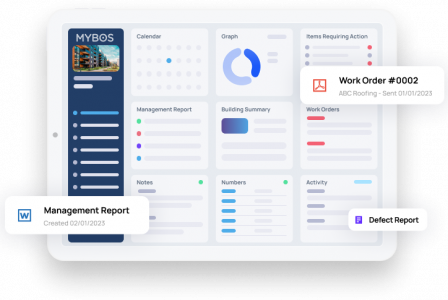
Ready to transform how you manage building documents and assets? Book a demo with MYBOS today and discover how our digital solutions streamline record storage, maintenance, and compliance all in one centralised platform.